Registration is closed
Please, SUBSCRIBE to our Newsletters if you wish to receive information on new editions.

Live Online Course – 4th edition
February 24th and 26th & March 4th, 5th, and 7th, 2025
Contact: courses@transmittingscience.com

Please, SUBSCRIBE to our Newsletters if you wish to receive information on new editions.
The goal of this course is to explain how you can obtain surface 3D digital models using structure from motion (SfM) photogrammetry. This technique offers the possibility to obtain 3D models of the external morphology of the samples, including colour and texture, of a wide size range of specimens with medium-low cost and fast approaches.
By the end of this course, participants should be able to obtain high-quality 3D models with the most commonly used surface digitisation technique. They will also be able to edit and manipulate the digital models to prepare them for use in typical analytical software and 3D printing.
Places are limited to 18 participants.
Data acquisition (small to large specimens)
Basics of the Structure from Motion (SfM) method: what data does it require?
Model creation
Basics of model editing for printing, web display, scientific use, etc.
Long term data storage and scientific reusability considerations
Ethical concerns and best practices.
This course is addressed to researchers and technicians who work with complex structures and need to digitise their samples for different reasons, such as digital preservation, mass digitisation of collections, 3D printing and research questions (e.g. for geometric morphometrics, biomechanics analyses, etc).
No specific background is required.
Main software that you will use during the course: Reality Capture, Agisoft Metashape, GOMinspect and Meshmixer. Temporary licences will be provided for the course.
For the equipment, below we are listing the ideal setting you should have for your research, and the minimum you will need to do the practice, in case you do not have access to the ideal one:
IDEAL: DSLR or mirrorless camera with a wide-angle lens with short minimum distance, matching LED light ring (best: SL-108).
OK: digital camera with LED light ring.
MINIMUM: good cell phone camera.
IDEAL: Dedicated photogrammetry scale bars.
OK: any other measure, e.g. labeled cm scale.
IDEAL: turntable, ethafoam or similar, 6 to 8 raw-wooden chopsticks
OK: styrofoam, 6 to 8 chopsticks
Online live sessions on February 24th and 26th and March 4th, 5th, and 7th, 2025.
From 14:00 to 17:30 (Madrid time zone).
Total course hours: 30 (17.5 hours of online live lessons, plus 12.5 hours of participants working on their projects).
This course is equivalent to 1 ECTS (European Credit Transfer System). The recognition of ECTS by other institutions depends on each university or school.
This course will be split evenly between practical sessions and lectures. Participants are expected to create a 3D model in the time between the first block and the second block of the live sessions, which will be discussed during the second block.
Live sessions will be recorded. However, attendance to the live sessions is required to obtain the course certificate.
This course will be delivered in English.

Dr. Verónica Díez Díaz
Museum für Naturkunde
Germany

Dr. Heinrich Mallison
Palaeo3D
Germany


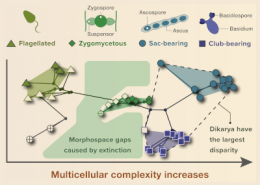
 Carmona et al. Science Advances, 2021 Vol 7, Issue 13
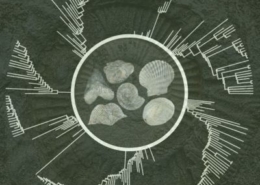


 Marcé-Nogué J. 2022. PeerJ 10:e13890 https://doi.org/10.7717/peerj.13890