Registration is closed
Are you interested in this course?
Please fill in the form below, and we will let you know as soon as the next edition is announced.
You can also use this form to request this as an in-house course for your group.


Live Online Course – 1st Edition
June 1st, 3rd, 5th, 2026
Contact: courses@transmittingscience.com

Are you interested in this course?
Please fill in the form below, and we will let you know as soon as the next edition is announced.
You can also use this form to request this as an in-house course for your group.
Click here to express interest in this course
Statistical models are an essential tool for scientists: these quantitative simplifications of how the real world works can be compared against empirical data to advance our understanding of reality. Often, however, multiple competing explanations can be put forward to interpret the same empirical dataset. How do we choose among the many models, each representing plausible explanations? Which is the “best” model?
In this course, we will use Information theory (Akaike Information Criterion, etc.) for model selection. We will also address inference from many models (multimodel inference) and calculation of relative importance (Akaike weights). Since no method is “perfect”, we will also address the limitations of such methods, and explore alternatives (shrinkage, dominance analysis).
The course will combine practical exercises with statistical theory, literature review and simulations.
Places are limited to 20 participants.
Theory
Practice
All modelling will be done in R. Therefore, basic experience with R is required: loading files, running scripts, and fitting models.
Experience in statistical modelling (regardless of software) is beneficial.
Participants are required to have a computer with access to a good internet connection, a recent version of R and RStudio installed, and a set of R packages whose installation script will be provided before the course.
Online live sessions on June 1st, 3rd, 5th, 2026.
From 14:00 to 16:30 (Madrid time zone).
Total course hours: 10 (7.5 hours of online live lessons, plus 2.5 hours of tutored assignments and exercises).
We will combine online lectures with hands-on computational exercises in R.
Live sessions will be recorded. However, attendance to the live sessions is required to obtain the course certificate.
This course will be delivered in English.
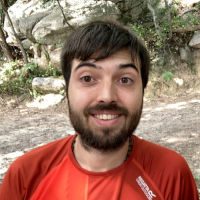
Dr. Marc Riera Dominguez
Center for Ecological Research and Forestry Applications
Spain


 Bouckaert et al. PLoS Comput Biol 15(4): e1006650