Home » Courses » Genetics and Genomics »
Course Overview
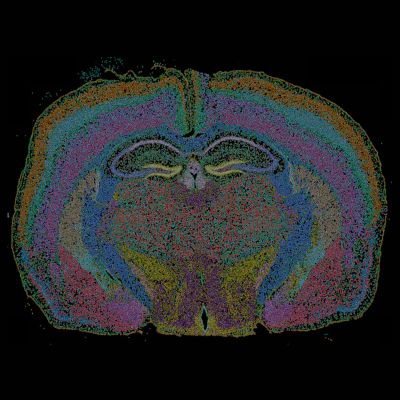
Standard methods of RNA sequencing (either bulk or single-cell level) provide an in-depth snapshot of a cell’s current transcriptional status. However, the spatial context of that cell (i.e., what other cells are in the neighborhood and the tissue organisation) is lost in these methods. In contrast, spatial transcriptomics provides the gene expression patterns within the existing spatial context. By covering hundreds of genes to the entire transcriptome, expression patterns can be tracked through a variety of tissue-types and diseases to understand the biology at the organisational level.
This course will cover the fundamentals of current spatial transcriptomics methods, including a comparison both imaging-based and sequencing-based methods. Using publicly-available data, participants will process several datasets from initial loading and quality control to more advanced downstream analysis like integration and niche identification. Example datasets will be human or mouse tissues due to available datasets but these methods are not limited to these organisms.
This course will give participants hands-on practice in addition to some practical theory to provide a working foundation in analysing their own spatial data.
By the end of this course, participants will understand:
- The different types of spatial transcriptomics platforms available including sequencing-based and imaging-based
- Current best practices for spatial transcriptomics analysis including quality control, segmentation, integration, and cell typing
- Downstream applications from processed spatial transcriptomics including neighborhood / niche identification
The course is suitable for R and Python users.
Places are limited to 16 participants.


 Rosli et al. 2021, Scientific Reports 11, 24523