• Advanced Courses in Life Sciences

    Header of Ecology at Transmitting Science

Home » Courses » Ecology » Course Ecological Forecasting in Practice: Building Iterative Workflows for Biodiversity Predictions

Live Online Course – 1st Edition

Ecological Forecasting in Practice: Building Iterative Workflows for Biodiversity Predictions

January 25th-29th, 2027

Transmitting Science Course Ecological Forecasting in Practice

Course Overview

Robust ecological forecasts are increasingly needed to inform conservation and management decisions in a rapidly changing world. Ecological forecasting integrates data, models, and uncertainty to generate actionable predictions of ecosystem change.

This course introduces participants to near-term iterative ecological forecasting, with a strong emphasis on practical implementation and real-world applications. Participants will work through the full forecasting cycle, from data processing to model building, forecast generation, evaluation, and iteration.

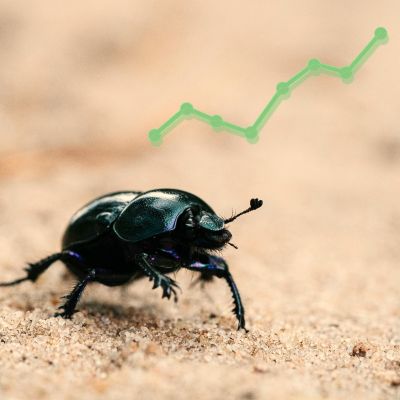
A central feature of the course is a real forecasting challenge based on shrub, rabbit, and dung-beetle abundance  datasets from Doñana National Park, where participants will integrate remote sensing and ecological data to predict biodiversity dynamics under global change.

The course combines theoretical background with hands-on exercises in R, and emphasises reproducible workflows, uncertainty quantification, and model evaluation. Each topic combines short lectures with hands-on exercises and discussion, allowing participants to apply concepts in practice.

By the end of the course, participants will have developed and submitted their own ecological forecast.

Places are limited to 25 participants.

Newspaper Newspaper

Programme

Day 1. Introduction to Ecological Forecasting

  • The role of forecasting in ecology and conservation
  • From explanation to prediction: forecasting frameworks
  • Near-term iterative forecasting vs long-term projections
  • Overview of forecasting workflows (data → model → forecast → evaluation → update)
  • Success versus quality in ecological forecasts
  • Introduction to the EFFI forecasting challenges

Practical

  • Course setup (R environment, data, repositories)
  • Exploration of ecological and remote sensing datasets

Day 2. Working with Ecological and Remote Sensing Data

  • Ecological time series: structure and challenges of integrating heterogeneous data
  • Remote sensing for forecasting: Presenting most commonly used data types
  • Linking satellite data with field observations (example: NDVI)
  • Data preprocessing and feature extraction

Practical

  • Processing NDVI data (cleaning, smoothing, deriving metrics)
  • Exploring seasonal dynamics and trends

Day 3. Building Forecast Models

  • Introduction to forecasting models
    • Autoregressive models (Hierarchical Bayesian models)
    • Correlational models (GLMMs)
    • Mechanistic models (incorporating physiology and species interactions))
  • Model assumptions and limitations
  • Iterative forecasting concepts

Practical

  • Fitting forecasting models in R
  • Generating short-term forecasts of biodiversity dynamics

Day 4. Uncertainty, Evaluation, and Reproducible Workflows

  • Sources of uncertainty in ecological forecasts
  • Representing and propagating uncertainty
  • Forecast evaluation and model comparison
    • Metrics (e.g., Mean Squared Error)
    • Benchmark models (e.g., persistence, climatology)
  • Introduction to reproducible forecasting workflows
    • Version control (Git)
    • Environment management (renv / Docker concepts)

Practical

  • Evaluating forecast performance
  • Adapting and improving models based on results

Day 5. Forecasting Challenge and Applications

  • Forecasting challenges as a tool for scientific advancement
  • Standardized forecast formats and submission
  • Linking forecasts to decision-making and adaptive management

Practical

  • Final model development
  • Preparing and submitting forecasts

Discussion and wrap-up

  • Comparison of model performance
  • Strengths and limitations of different approaches
  • Future directions in ecological forecasting

Assumed Background

Participants should have:

  • Basic experience with R (loading data, running scripts, basic modelling)
  • General background in ecology, environmental science, or related fields

No prior experience with ecological forecasting is required.

Keyboard Keyboard

Software

Participants are required to have:

  • A computer with a stable internet connection
  • A recent version of R and RStudio installed
  • Required R packages (installation script provided before the course)

Some familiarity with Git is helpful but not required.

Dates & Schedule

Online live sessions on January 25th-29th, 2027.

From 14:00 to 18:30 (Madrid time zone).

Total course hours: 27.5 (22.5 hours of online live lessons, plus 5 hours of  participants working on their own).

This course is equivalent to 1 ECTS (European Credit Transfer System). The recognition of ECTS by other institutions depends on each university or school.

Format

In the live sessions we will combine online lectures with hands-on computational exercises, in R.

Live sessions will be recorded. However, attendance to the live sessions is required to obtain the course certificate.

This course will be delivered in English.

Instructor

Cara_Gallagher_instructor_for_Transmitting_Science

Dr. Cara Gallagher
Aarhus University,
Denmark

Dr. Patrícia Singh
Masaryk University, Czechia
University of Potsdam, Germany

Dr. Billur Bektaş
ETH Zürich,
Switzerland

Dr. Maria Paniw
Doñana Biological Station,
Spain

Registration Fees

  • Course Fee
  • Early bird (until November 30th, 2026):
  • 236 €
    (188.8 € for Ambassador Institutions)
  • Regular (after November 30th, 2026):
  • 290 €
    (232 € for Ambassador Institutions)
  • Prices include VAT.
    After registration you will receive confirmation of your acceptance on the course.
    Payment is not required during registration. Check discounts here.

Registration

We care about your privacy. If you require more information about the processing of your personal data and your rights, please read our privacy policy (below).

Organiser

Logo Transmitting Science

Collaborators

Logo COBCYL
Logo COBCV
Logo COBEUSKADI
Logo COBGA